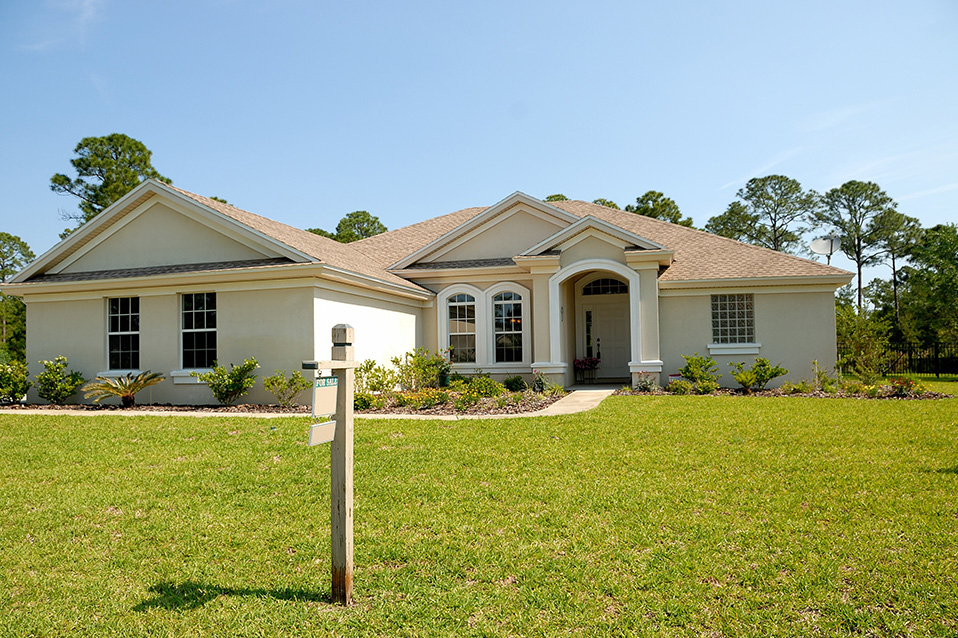

The fun part about designing a new dual occupancy home might be planning out the little details, the decor, the amenities, and many other features. While certainly exciting as a buyer, one important little detail that perhaps isn’t as exciting but is nonetheless important is how the land title is structured.
The land where you intend to build your dual occupancy is yours, or at least you’re planning on purchasing it before proceeding with development, so can’t you just plop down a couple homes and call it a day? Not so fast, mate. Land ownership is one thing – yes, it’s yours – but the way in which the title is structured is quite important if you intend to build a dual occupancy home there.
Here’s a brief rundown of how it works:
Property as a Single Land Title
The first type of structure we’ll look at is a single land title. It’s fairly common at first, but over time, many will likely recommend that you choose a different title structure depending on how the land is used.
In a single land title structure, both properties are located on your property, which is a single plot of land all under a single ownership title. What this means is that both dual occupancy homes are legally part of that property. It’s a decent and straightforward approach if you intend to live in one unit and rent the other. Sounds simple, right?
Where the rubber hits the road, however, is when the owner wants to sell one property or if the owner lives within a council that does not permit dual occupancy homes under a single land title structuring at all. In the former case, the owner has to legally subdivide the land in order to sell the property to a buyer.
Torrens Title Subdivision
The second type is the first common type of subdivision, i.e the process of partitioning an existing plot of land into two or more separate legal entities. A Torrens title subdivision is a type of subdivision whereby both homes are legally separated from one another, and each has its own Torrens title. This means that the owner of each property (it could be you owning both) has full freehold ownership of their plot of subdivided land and the property that sits atop it.
Since both properties are separate, on separate plots of land, the owner can sell one or both separately, as well as separate mortgages.
The downside to Torrens title subdivision is that it requires a little more bureaucracy, the properties are subject to minimum property size requirements, and changes may be needed to infrastructure, e.g. to attach utilities.
Strata Title Subdivision
Another common type of subdivision is strata title subdivision, which you may be familiar with in condominium properties. Strata titles are similar to Torrens in that ownership is legally separated, but with a little catch. Under a strata, each property owner has ownership of their dwelling and the private spaces therein, but there is a shared component as well for things like common areas, e.g., gardens and car parks.
When there are two properties (such as with a dual occupancy home), the way it’s usually structured is that each owner holds a 50% share of the land, so that could be you owning both (100%), or you might hold 50% if you decide to sell one of the properties.
Trevor Homes
Need assistance planning your dual occupancy home? Contact Trevor Homes today.

